Ogawa Eye Clinic
About
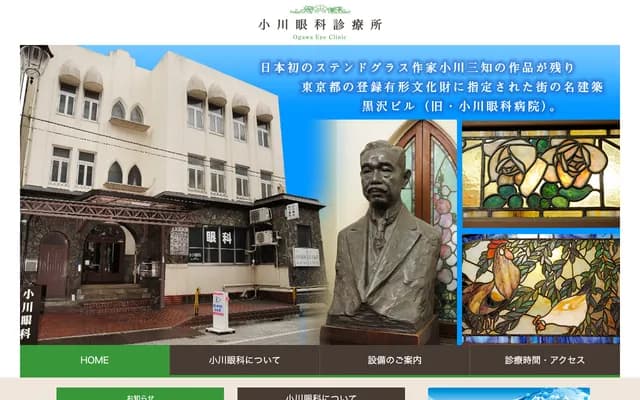
Ogawa Eye Clinic, located in Ueno, Taito City, Tokyo, operates in the "Kurosawa Building," a registered tangible cultural property completed in 1931 (Showa 6). This building has survived the war and retains its original appearance from the time of construction, characterized by extensive use of stained glass created by Michi Ogawa. The clinic opened in 1931 and was founded by the first director, Kenzaburo Ogawa, who was then a professor at the University of Tokyo. Subsequently, Junzo Kurosawa, who served as President of the Japan Medical Association, and his son Kiyoshi served as directors, and currently female ophthalmologists provide medical care. Although the building is historic, it is equipped with the latest equipment, allowing examinations and treatments to be performed on-site. The specialty is ophthalmology, treating cataracts, glaucoma, fundus diseases, dry eye, eye strain, hay fever, lacrimal duct diseases, and pediatric ophthalmology. Refraction screening tests are also conducted to detect refractive errors and eye position abnormalities that cause amblyopia in infants and children (from 6 months old), with the introduction of Topcon's "Pediatric Auto Refractometer." The medical team, including ophthalmologists, provides care, and staff with specialized qualifications such as certified guidance doctors for disability certification, designated doctors for intractable diseases, and occupational health physicians are on staff. English is supported, with hours in the morning Monday through Saturday and afternoon Monday, Tuesday, Wednesday, and Friday; the clinic is closed Thursday afternoons, Saturday afternoons, Sundays, and holidays.